
.svg)

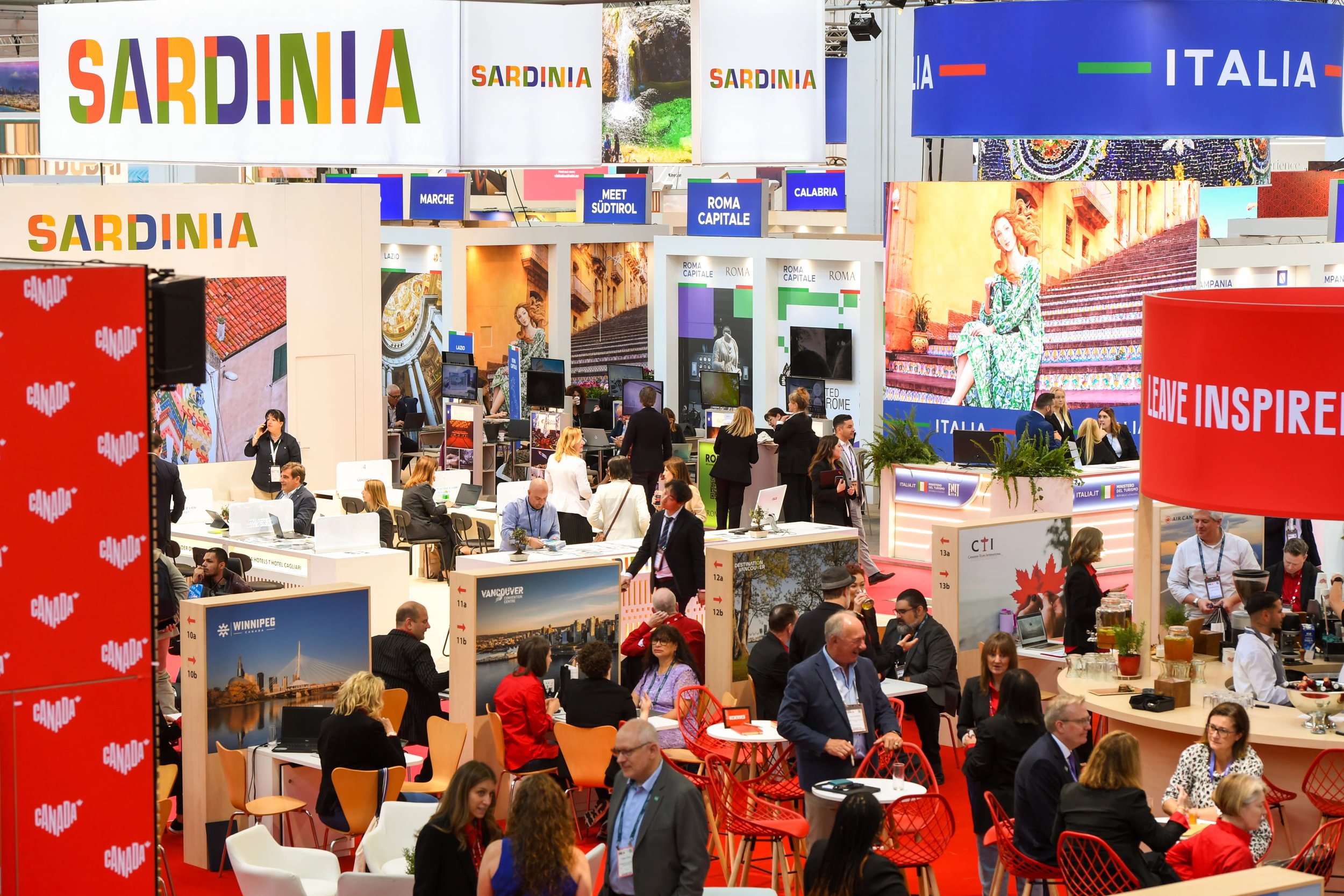
After some busy days of follow up post-IMEX Frankfurt, we had the opportunity to reflect on some of our conversations with attendees.
Beneath the product discussions, a broader theme had emerged: event organisers are increasingly rethinking how exhibitors engage with events.
That felt particularly relevant given IMEX’s 2026–2027 Talking Point: Design Matters. IMEX framed design not simply as how something looks, but how it works, feels and shapes experience. That perspective aligned closely with how we're thinking about exhibitor management and the opportunity to improve the journey for everyone involved.
The organisers we met weren't simply looking for another tool. They were thinking about how to make events easier to navigate, manage and experience.
The manual still does too much work
One of the clearest themes was the continued pressure being placed on the traditional exhibitor or sponsor manual.
It's still expected to hold everything: deadlines, logistics, floorplans, supplier information, safety guidance, marketing requirements, forms, contacts and FAQs. In theory, it remains the source of truth. In practice, it's often skimmed, forgotten or only revisited when someone's already under pressure.
This isn't because exhibitors are careless. It's because the way people consume information has changed.
Few people want to search through a lengthy PDF to find a single answer about Wi-Fi, power, access times or badge collection. They expect information to be searchable, accessible when they need it and relevant to the task at hand.
For organisers, this creates a familiar operational challenge. The information's been provided, yet the operations team still answers the same questions repeatedly. The manual exists, but the team effectively becomes the manual.

The gap between information and action
A recurring theme throughout our conversations was the gap between sending information and getting action.
Organisers can send reminders, provide forms and communicate deadlines clearly. Yet the exhibitor journey is rarely straightforward. The person signing the contract may not be the person uploading the logo. The marketing contact may not know the health and safety requirements. The agency building the activation may not have been copied into the relevant communications.
The challenge is getting the right person to complete the right task at the right time.
How do organisers reduce dependence on manual chasing? How do they provide enough clarity without overwhelming exhibitors? How do they avoid asking returning exhibitors and sponsors for the same information repeatedly while maintaining compliance?
This is where design becomes operational rather than visual.
A well-designed exhibitor journey should reduce uncertainty, make next steps obvious and support organisers without making exhibitors feel managed.
Exhibitor experience starts earlier than we think
Another strong theme was the growing recognition that exhibitor experience begins long before anyone arrives onsite.
For exhibitors and sponsors, the experience starts the moment they're asked to upload documents, approve artwork, invite colleagues, order services and understand what's expected of them.
This is often the first significant interaction they have with the event.
Many organisers aspire to deliver a polished, premium experience. Yet if the behind-the-scenes process still relies on spreadsheets, email chains, static documents and disconnected systems, that ambition can be difficult to achieve.
Sponsors and exhibitors who experience a professional, well-organised onboarding process are more likely to feel positive about the event, invest further and return in future years. Conversely, exhibitors who spend their time chasing information or repeating tasks are unlikely to describe the experience as seamless, regardless of how successful the event itself may be.
Exhibitor experience isn't defined solely by what happens onsite. It includes every interaction that helps people get there.
Repetitive questions are a signal, not just a nuisance
Every event team knows the questions.
- What time can we access the hall?
- Where do we order power?
- Is there Wi-Fi?
Individually these questions are simple. At scale, they become a significant drain on resources.
What stood out at IMEX wasn't simply the frustration of answering the same questions repeatedly, but the opportunity hidden within them.
If ten people ask the same question, it tells organisers something. The information may be missing, difficult to find or unclear. The manual may be technically complete but practically ineffective.
In that sense, participant questions are not just support requests. They are feedback on the design of the event’s information architecture.
The more organisers can learn from these patterns, the more effectively they can improve future onboarding journeys. However, when processes remain heavily manual, teams rarely have the time to analyse what's working and what isn't.
A more flexible foundation allows information to be updated, refined and shared in real time, helping organisers continuously improve the experience for both exhibitors and internal teams.
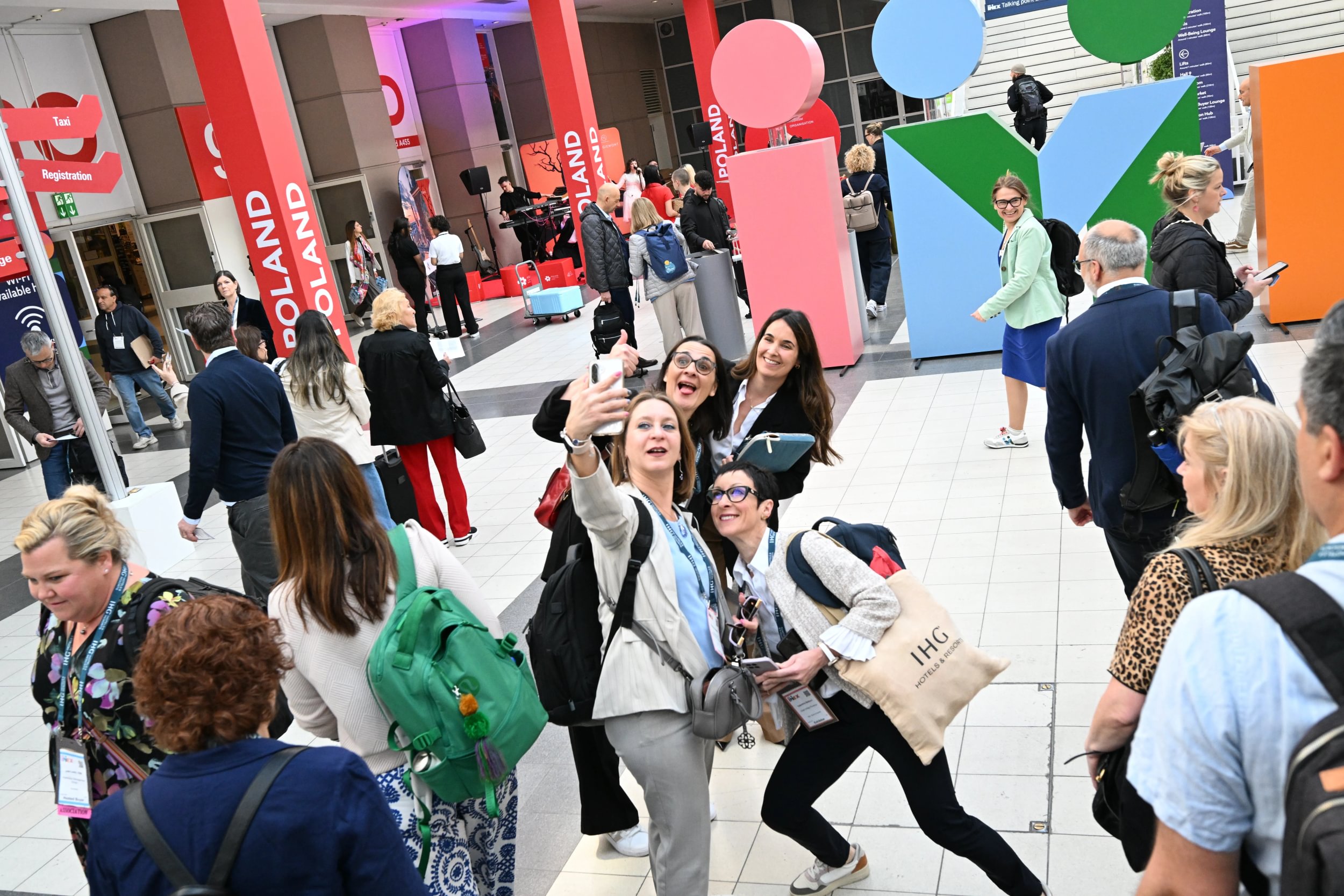
Communication is becoming more cultural
One of the most interesting discussions centred around communication channels.
In some markets, email remains the preferred method for formal event communication. In others, it's becoming increasingly ineffective. Organisers working internationally highlighted the growing importance of WhatsApp, WeChat, SMS and other mobile-first channels, particularly where exhibitors expect faster and more conversational communication.
Email remains structured and easy to audit, but it can also feel slow and impersonal. Messaging platforms are often more immediate and effective, but can present challenges around control and consistency.
The key point is that communication design is no longer one-size-fits-all.
A channel that feels professional in one market may feel outdated in another. A channel that drives engagement in one region may feel intrusive elsewhere.
For global events, organisers increasingly need to think not only about what they communicate, but how and where they deliver it.
More systems aren't always the answer
Another recurring theme was platform fatigue. Most organisers aren't lacking technology. They already have registration systems, event apps, CRM platforms, finance tools, floorplan software, websites and spreadsheets.
The problem often isn't the absence of technology but the lack of connection between systems.
Information entered in one platform frequently needs to appear somewhere else, be reviewed by another team or reported elsewhere. When those connections don't exist, teams bridge the gaps manually.
That's why integration featured so prominently in conversations throughout the week.
If an exhibitor submits a profile, it may need to appear on a website, in an app and within a directory. If a sponsor uploads an asset, it may require approval from multiple teams. If guest information is collected, it may need to connect directly with registration or badging systems.
The most effective event operations increasingly focus on flow: capturing information once, using it across multiple processes and reducing unnecessary duplication.
.jpg)
Sponsor delivery requires structure
Sponsor management also emerged as a particularly complex area.
Sponsor packages are rarely standardised. They involve different deliverables, approval processes, deadlines and expectations. Some require artwork approval, others hospitality management, guest registration or post-event reporting.
The result is often significant manual effort.
As sponsorship becomes more customised, delivery can become heavily dependent on spreadsheets, email chains and individual memory. One organiser described sponsorship options with so many variables that they ultimately created more than 250,000 possible package combinations.
This matters because sponsor experience isn't solely about visibility or footfall.
Sponsors want confidence that the organiser is in control. They want clarity around what's required, when it's needed and whether agreed deliverables are being fulfilled.
Good sponsor management isn't just an operational necessity. It's a key part of the commercial relationship.
Personalisation is becoming operational
Personalisation is often discussed in relation to attendees through content recommendations, networking opportunities and agenda planning.
However, our conversations highlighted a different form of personalisation: operational personalisation.
Exhibitors, sponsors, speakers, contractors and agencies all have different responsibilities, requirements and deadlines. Yet many onboarding processes still treat them in largely the same way.
Sending everyone the same information may seem efficient from an organiser's perspective, but it creates noise for exhibitors.
A better-designed process delivers information based on relevance. It reduces unnecessary content and makes important actions easier to identify.
That's where exhibitor experience and operational efficiency intersect. The clearer the journey is for exhibitors, the less chasing organisers need to do and the more prepared everyone becomes.
AI is only valuable when it solves real problems
AI featured in many conversations, but the interest was notably practical rather than theoretical.
The strongest response centred on AI's ability to help exhibitors find answers from approved event information.
Not open-ended AI. Not novelty AI.
Simply the ability to ask a question in natural language and receive an accurate answer based on event-specific content.
This addresses a very real challenge: exhibitors don't consume information in the way organisers often expect them to.
That thinking inspired the messaging on our stand this year. Rather than "Read the manual", the idea was simple: with Eventflow, you can "Ask the manual".
The opportunity extends beyond reducing emails. It includes better access to information, multilingual support, assistance across time zones and greater visibility into the questions exhibitors are struggling with.
Trust remains critical. Logistics, deadlines and safety requirements can't be guessed. AI only becomes valuable when it's grounded in approved event content and helps teams identify where communication can be improved.
Used effectively, it removes repetitive work and allows people to focus on higher-value tasks.
.jpg)
The bigger question
Looking back, perhaps the most valuable insight from IMEX was that many event teams aren't simply trying to improve administration. They're trying to redesign participation.
They want exhibitors to feel less overwhelmed, sponsors to feel more supported and agencies to have clearer workflows. They want internal teams to spend less time chasing information and more time delivering value. They want exhibitors across different markets to receive information in ways that feel natural to them.
That's why IMEX's Talking Point, Design Matters, felt so relevant.
Design isn't only about stage sets, signage, stand builds or app interfaces. It's also about the processes behind the event. It's the clarity of a deadline, the confidence a sponsor feels when deliverables are under control and the difference between a exhibitor feeling guided or overwhelmed.
Our conversations at IMEX reinforced a simple idea: the next phase of event design may be less about adding new layers and more about removing friction from the ones that already exist.
The industry doesn't need more noise. It needs clearer journeys, calmer operations and better ways to turn information into action.
For event organisers, the question after IMEX isn't simply: "What tools are we using?" but rather: "What kind of experience are we designing for everyone who helps bring our event to life?"
.jpg)
.svg)

.svg)